
Dry Age-Related Macular Degeneration
AMD is a progressive disease of the retina, the part of the eye that detects visual signals and sends them to the brain. It is the leading cause of vision loss in people over 65, and there is no cure.
There are two forms of AMD:
- The dry form accounts for 85 to 90% of AMD cases
- The wet form accounts for 10 to 15% of AMD cases

Your symptoms may be mild or you may have no symptoms for several years, if your dry AMD progresses, with time your ability to see clearly may change and you may experience vision loss.
Symptoms of dry AMD may include:

- Blurry or fuzzy vision
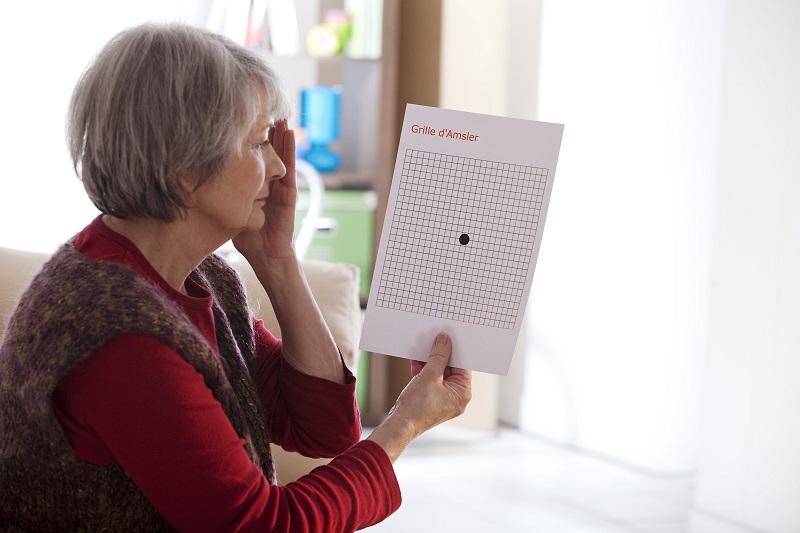
- Straight lines appear wavy or bent
- Reduced intensity/brightness of colors
- Trouble adapting to low light

- Loss of central vision, which is necessary for driving, reading, recognizing faces and performing close-up work
Early treatment can make a difference
There is no cure for dry AMD. Once retinal cells are lost, geographic atrophy scar remains, which leads to permanent vision loss. Early dry AMD diagnosis is important. Retinal health and vision loss management by your doctor can be started earlier with Valeda to improve vision and maintain benefits.
Valeda Photobiomodulation Improves Vision
Treatment with Valeda can help you see more clearly now and in the future
My Valeda Photobiomodulation Treatment
You are being offered treatment with the Valeda Light Delivery System because you have been diagnosed with dry age-related macular degeneration (AMD).
Benefits of Valeda Photobiomodulation Treatment
Treatment with Valeda can help you see more clearly now and in the future. Retinal imaging indicates improvement in eye scans when assessed for drusen (protein deposits observed in eyes with dry AMD).
How Valeda Works
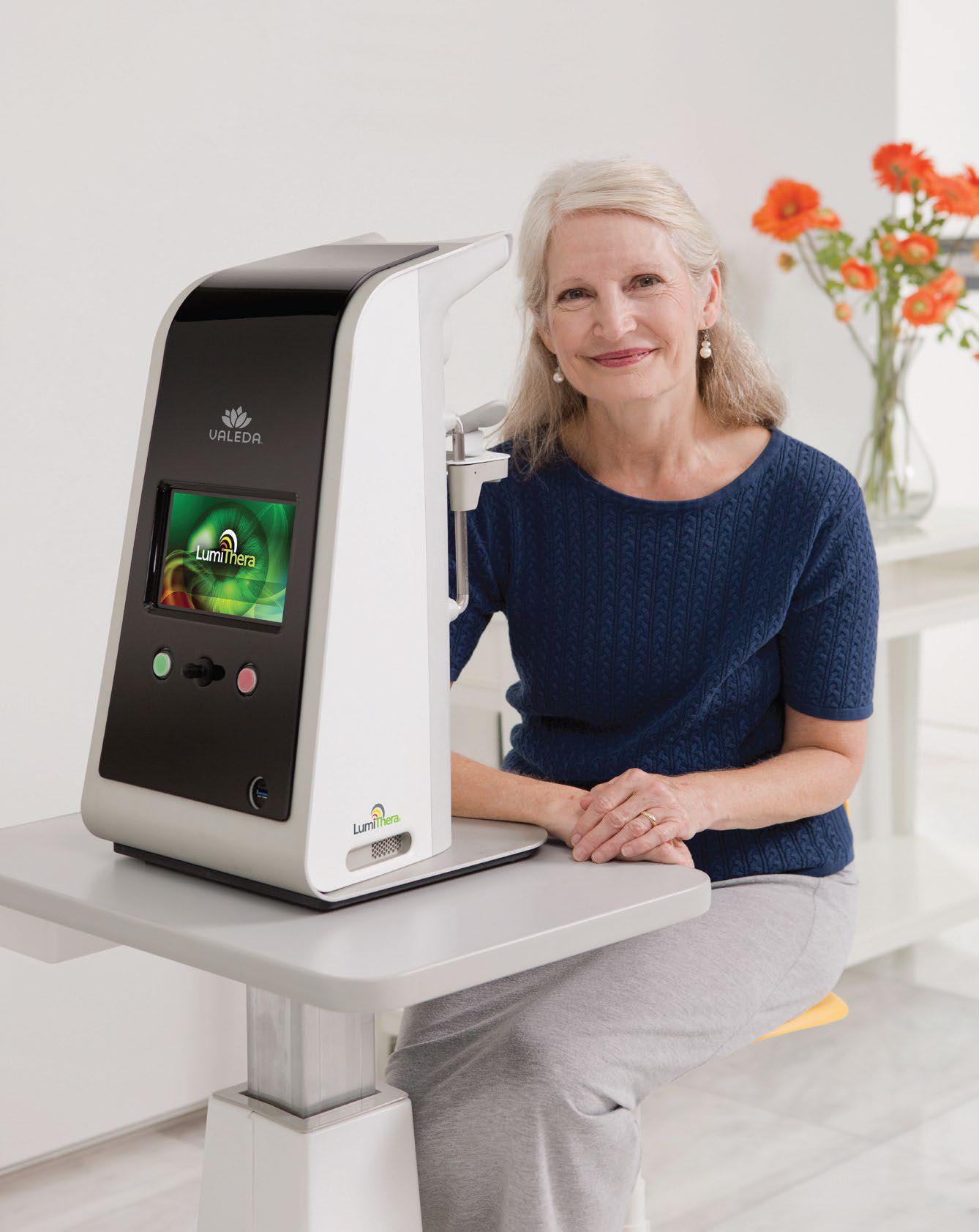
Valeda uses photobiomodulation (PBM), specific wavelengths of low- level light therapy, to stimulate energy production within the eye, resulting in improved cellular health. Healthy retinal cells are essential for maintaining good vision.
Preparing for Your Valeda Treatment
No special preparation is needed before treatment. You will need to remove glasses or contact lenses. There are no eye drops, drugs, or needles used in the treatment. There is no discomfort during or after the treatment.
During Your Valeda Treatment
You will be seated comfortably in front of Valeda and guided through each step of the treatment. The active treatment time is less than 5 minutes per eye per session.
You will receive 9 treatments over 3 to 5 weeks during each series. Typically, a series is repeated every 4 months. Your doctor will determine your plan.
After Your Valeda Treatment
Due to the exposure to bright lights, you may experience an afterimage following treatment. This is known as photostress. Normal photostress recovery time is approximately 15-30 seconds. Following treatment, you will be able to resume normal activities.
Valeda Safety
There have been no treatment-related side effects in clinical trials with Valeda.
Consult your eye doctor for an explanation of the benefits and risks associated with Valeda treatment.
Valeda is authorized by the U.S. Food & Drug Administration (FDA) and is available by prescription only.
Don’t Delay, Ask Your Eye Doctor if Valeda is Right for You
Valeda Indications for Use
The Valeda Light Delivery System is intended to provide improved visual acuity in patients with best-corrected visual acuity of 20/32 through 20/70 and who have dry age- related macular degeneration (AMD) characterized by:
- The presence of at least 3 medium drusen (> 63 μm and ≤ 125 μm in diameter), or large drusen (> 125 μm in diameter), or non-central geographic atrophy, AND
- The absence of neovascular maculopathy or center-involving geographic atrophy
After about two years, the Valeda Light Delivery System treatment provides improved mean visual acuity of approximately one line of visual acuity (ETDRS) compared to those not receiving the treatment.
Contraindications
As a precaution, patients have not been tested and should not be treated with Valeda if they have any known photosensitivity to yellow light, red light, or near-infrared radiation (NIR), or if they have a history of light-activated central nervous system disorders (e.g., epilepsy, migraine). In addition, patients should not receive treatment within 30 days of using photosensitizing agents (e.g., topicals, injectables) that are affected by 590, 660, and/or 850 nm light before consulting with their physician.